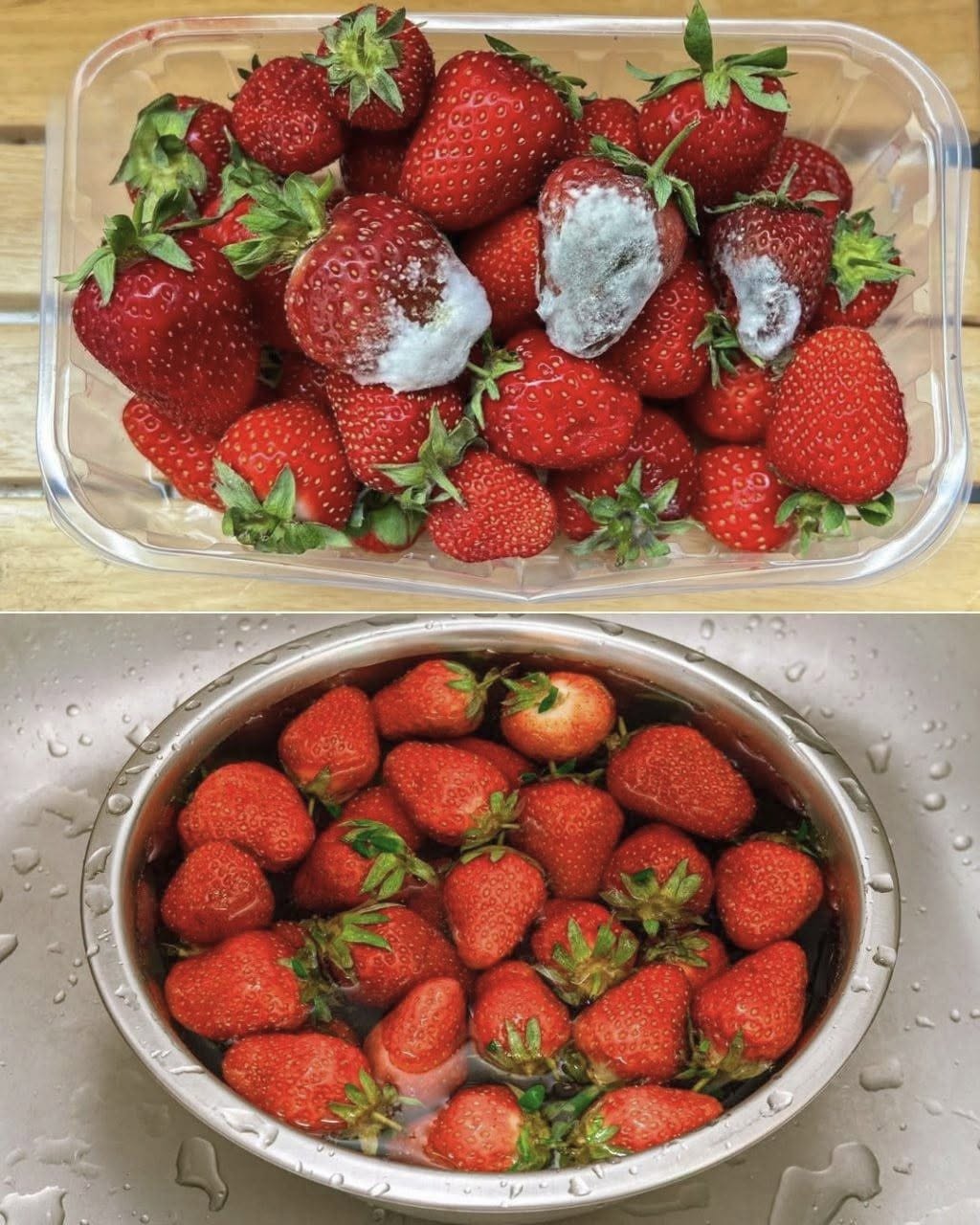
3. The Vinegar Solution to Extend Shelf Life
One of the most effective methods for extending the freshness of strawberries involves a diluted vinegar bath.
Vinegar helps reduce mold spores and surface bacteria that contribute to spoilage. When properly rinsed afterward, it does not noticeably affect flavor.
Prepare a solution using one part white or apple cider vinegar and three to ten parts water. A common mixture is ½ cup vinegar with 3 cups water.
Soak whole strawberries, with stems attached, for 5 to 10 minutes. Gently stir occasionally to ensure all surfaces are exposed.
Drain and rinse thoroughly under cold water. Dry completely with paper towels or a salad spinner.
Line a container with paper towels and arrange the strawberries in a single layer. Store in the refrigerator.
Using this method, strawberries may remain fresh for up to a week, depending on their condition at purchase.
4. Dry the Strawberries
Drying strawberries is an excellent way to preserve them for long periods while concentrating their natural sweetness.
Dried strawberries can be enjoyed as snacks, added to cereals and yogurt, or incorporated into baking recipes.
To prepare strawberries for drying:
• Wash and dry them thoroughly.
• Remove the stems.
• Slice them into thin pieces approximately 3–5 mm thick.
A food dehydrator provides the best results. Arrange slices in a single layer and dry them at 50–55°C (122–131°F) for 8–12 hours.
If using an oven, preheat to approximately 120–140°C (248–284°F). Place slices on a parchment-lined baking tray and dry for 3–4 hours, leaving the oven door slightly open to release moisture.
In hot, dry climates, strawberries can also be sun-dried by placing them on trays covered with mesh or gauze and exposing them to sunlight for several days until fully dried.
One final preservation method transforms strawberries into a delicious pantry staple that can be enjoyed long after the season ends.
5. Make Strawberry Jam
Strawberry jam is both a preservation technique and a delicious preparation that allows you to enjoy strawberries throughout the year.
Traditional strawberry jam requires only fresh strawberries, sugar, and lemon juice. No artificial thickeners are necessary.
The amount of sugar is important for safe preservation. Typically, sugar should represent approximately 50% of the fruit’s weight. This concentration helps limit microbial growth and contributes to the jam’s stability.
Properly prepared jam can be enjoyed on toast, used as a filling for cakes and pastries, or incorporated into a variety of dessert recipes.
Useful Tips for Maximum Freshness
• Always inspect strawberries before storing and remove any damaged berries.
• Avoid exposing strawberries to direct sunlight or heat.
• Do not wash strawberries until you are ready to eat or process them.
• Store strawberries in breathable containers whenever possible.
• Label frozen or preserved strawberries with the date of storage.
Final Thoughts
Strawberries are among the most beloved fruits of spring, but their delicate nature means they require proper care. Whether you choose refrigeration, freezing, vinegar treatment, drying, or jam-making, each method offers a practical way to enjoy their flavor for longer.
By selecting fresh berries, minimizing moisture, and choosing the storage technique that best suits your needs, you can reduce waste and enjoy delicious strawberries well beyond their peak season.
For Complete Cooking STEPS Please Head On Over To Next Page Or Open button (>)